I am convinced that some political journalists know nowt about political parties and how they operate internally and on the ground. The latest evidence for this is in the Independent on Sunday. It contains yet another allegation that the Coalition is about to blow itself apart, this time because the Lib Dems will hold a conference debate on gay marriage. I have no problem about the press reporting this as something that brings us into conflict with the Tory right. It may well do. The Tebbits will be apoplectic with rage as they sip their G and Ts. But gay issues generally command cross party support now and I can't see the Tory mainstream melting with rage over this. The fact Cameron now supports civil partnerships indicates the direction in which the mainstream is moving.
What I found fascinating about the IoS article was the allegation the plans will cause a split with the "traditional Methodist" liberals. Quite where this mythical group has been conjured up from would be interesting to know. There is no longer a Methodist wing in the Liberals. Maybe 100 years ago the nonconformist religious element of the old Liberal party was something that wielded influence. But that was a century ago. Quite which planet the IoS was on when this article was written is not clear. The sound of barrel bottoms being scraped as the search continued for divisions must have been quite loud in the IoS newsroom when this drivel was written.
So what next from the history-challenged journalists of our national press? Perhaps calls to restore the pension link will upset militant Gladstonians. Or imposing a levy on banks could cause problems with the free trade wing of the party. Or scrapping Trident could create divisions with the Churchillians. All very silly but not as silly as that IoS article.
---
Sent via BlackBerry
Sunday, August 08, 2010

I am "bamboozling" Labour councillors
At the last full council meeting in Gateshead, Labour put in a motion about the cancellation of the Building Schools for the Future programme. BSF was launched with a great fanfare by the Labour government with the aim of rebuilding or renovating most secondary schools in the country. And whilst some great school buildings were constructed, the programme turned out to be slow, vastly bureaucratic and schools often came in above the initial price. The end of BSF affected 5 schools in Gateshead.
Labour's motion was all about shaking a fist at the government. It demanded the immediate restoration of BSF. It didn't actually ask for anything that was likely to be granted or was realistic in the circumstances. After all, the government were not likely to implement a complete and immediate u-turn on a high profile issue just because Gateshead Council demanded it in a motion. Our amendment focused on the real world. The government have announced a review of school building plans that have been put on hold to decide which should go ahead. Our amendment called on the Council to influence positively the review in favour of the Gateshead's rebuilding plans. Our amendment was rejected by Labour. The debate highlighted the state of denial in which Labour operates and also demonstrates they are now putting party political interest at the forefront of their actions.
I moved the amendment on behalf of the Lib Dem group. I pointed out, as did our amendment itself, that the previous government had brought forward from 2011 to 2009 capital investment worth £3 billion. This includes £800 million of investment in schools - removed from spending plans for 2011 and spent in 2009 instead as a way of boosting the economy. I also pointed out that the previous government had agreed to cut by nearly two thirds the proportion of GDP spent on public sector capital schemes by 2014. The problem we have, I reminded the members opposite, was that in the run up to the election, Labour continued to make spending promises that were supposed to be financed from a capital budget they had already spent.
Labour however were having none of this. They angrily denounced us and claimed there would be no cuts had Labour won the election. Interestingly, none of them decided to respond directly to what I said, other than Cllr Mick McNestry, who merely claimed I was trying to "bamboozle them with figures." Other than that, he made no attempt to address the issues I raised. And since the figures I gave them were direct quotes from the Budget and Pre Budget reports of the last Labour government, this allegation says more about the ability of Labour to understand what they themselves have done rather than anything about the content of my own speech. It brings me on to the point that Labour are in complete denial about the state of the country's finances and their role in government. All this from a party that claimed just a few months ago that even under them, cuts would be worse than under Mrs Thatcher.
Labour speeches almost all claimed in some form or other that our amendment represented support for cuts. I don't know how many of them had read it but it says explicitly that the council should be pressing the government's review to support the go ahead of Gateshead's school rebuilding plans. As is often the case with Labour, they take the view that if you are not for them, you are against them. However, by the end of the meeting, Labour were the only party on the council to vote against calls to the government to go ahead with school rebuilding in Gateshead.
Labour leader Mick Henry did what he does nearly every time we put forward an amendment: he demanded we withdraw it. He claimed the council needed a united front. So we offered such a united front: after consulting colleagues I suggested we withdraw our amendment and Labour withdraw their motion. We would then be happy to have a joint approach to the government. Whilst I could see many Labour members at least were interested in considering the proposal, Mick Henry rejected it out of hand. He argued that compromise was needed - and the compromise was Lib Dems abandoning their position and voting with Labour. So much for plurality and cross party cooperation. No wonder it was not possible to form a coalition with Labour when their ranks are full of Mick Henrys. Despite this, my message to Labour members is that the offer remains on the table, with or without Mick Henry's agreement.
The debate reminded me of attacks on us by Labour a few years ago when we had the policy of the 1p tax rise for education. Labour made all sorts of claims and allegations that the policy would lead to the end of Western civilisation as we know it, and also alleged incorrectly that we were spending the same money twice. So Labour, you would have thought, would know that magic money pots that keep filling themselves with money of their own accord from which anything can be financed just don't exist in the real world. Having heard what they said in the past about such sources of money, it seems all the more remarkable that they can pretend that money they have already spent on new buildings can be spent a second time on more new buildings.
Under Blair, Labour spent a great deal of time and effort in changing perceptions of the party on the economy, spending and taxation from one or irresponsibility and recklessness to one of responsibility and sensible judgement. An image that was carefully built up over a long period of time has been demolished in a matter of weeks. No one likes cuts, but no one likes an irresponsible party that will flush the economy down the pan.
---
Sent via BlackBerry
Friday, August 06, 2010
The dinosaurs unite against reform
I need to do some catch up as I haven't blogged for a week. I've been involved with lots of mainly non-political activity recently which has taken up quite some time. Anyway, I did notice over the weekend that the GMB union is to bankroll the campaign of reaction against the yes vote in next year's voting reform referendum. I have to say I am not surprised. The GMB has always struck me as something of a dinosaur and it is equally of no surprise that they have teamed up with the Tory right to oppose reform. As I predicted in a blog post a few weeks ago, there will be some strange coalitions forming. Many elements of the Labour movement appear to have no difficulty forming a coalition with the Tory right that has been excluded from power by the creation of the Lib Dem Conservative Coalition.
That leads me on to a message I received from a leading Labour member in the North East in which this person gloated over the prospect of the No vote winning next year. The same person also accused me and the Lib Dems of "betraying communities" in region. It is interesting that these two points were made in the same message. Didn't Labour fight the election on a commitment to the alternative vote, subject to a referendum? We are now putting that into action and this Labour member gloats at the prospect of a Labour policy being defeated. Yet what does this Labour member say to the people who voted Labour because they called for constitutional reform and especially the introduction of AV? Surely they will be feeling betrayed by Labour?
Not all elements of the Labour party are reactionary and hostile to reform. Whichever Miliband wins the leadership will, at least from recent statements, back reform. The general approach of Labour however to voting reform was governed by the need to appear favourable to reform before the election was held. The old system had become indefensible. Labour probably did not go through a genuine reappraisal of the need for reform under Brown. He was looking instead to cling on to power by any means. Quite where Labour wants to go now that Brown has gone is not clear. Assuming Miliband (D or E) wins the leadership, we may get a better picture. Whether either can carry the rest of their party with them is yet to be seen.
---
Sent via BlackBerry
Friday, July 30, 2010
Time now to phase out Trident
The decision by the Treasury that Trident submarine replacement should be paid for from within the existing defence budget means the Ministry of Defence must now look seriously at whether or not a Trident replacement is needed. The Treasury has now significantly undermined the argument that Trident is in the national interest. Some of us go further and argue that Trident is not in the national interest at all.
The Defence Ministry argued that Trident should be paid for by the Treasury as it is a matter of national security and is needed in addition to our normal military requirements. That argument has been rejected and going ahead with the replacement for Trident now means something else within the defence budget will have to give.
Quite what Trident replacement will achieve is still beyond me. It was a deterrent that no one dared use and arguably prevented war between NATO and the Warsaw Pact. But the world has moved on and the "enemy" is no longer the Communist East. Defence needs to be intelligent, mobile and flexible in the twenty-first century. Trident is none of that. And as it cannot be used against groups such as Al Qaida, it no longer acts as its original purpose as a deterrent between superpowers.
Arguably, it could be seem as a deterrent to smaller powers believed to be developing nuclear weapons, yet even then, the point is rather stretched. North Korea and Iran are paranoid states whose governments believe they are under siege from the rest of the world. For them, nuclear weapons are a defensive strategy which warns the rest of the world to keep their distance. They are not necessarily a weapon of aggression. And even if they were, any attempt to use them would result in the aggressor countries being wiped off the face of the planet by a world community that would not need nuclear weapons to achieve this end. As for Pakistan and India, their nuclear weapons are maintained because of their regional dispute which has been a running sore for 60 years. They are not weapons being pointed at the rest of the world.
Now is the ideal time at least to put Trident into the defence review. Hopefully that will happen.
Given that Labour are opposing every cut going, it remains to be seen what posture Labour adopts on Trident. In the last Parliament, Labour voted to replace Trident with a new fleet of submarines. What their latest policy is on this issue is yet to be seen.
---
Sent via BlackBerry
Thursday, July 29, 2010
Excellent news on retirement age
When I was working in the Policy Unit in Cowley St, one of the policy proposals I wrote up was the plan to abolish compulsory retirement at 65. This morning I woke to the news that the Coalition is to end from October next year the forced retirement of people at the age of 65. Excellent news!
We have an aging population and we are part of a competitive global economy. Forcing people with a high level of skills and experience into retirement against their wishes runs contrary to commonsense. It is bad for the economy and bad for business. And ultimately it should be up to individuals whether or not they want to retire.
There will be issues such as redundancy payments and the physical problems of continuing in a job which may require a higher level of physical activity. There is a danger though that this is overplayed as an issue. Despite the small number of challenges, the principle of ending compulsory retirement is right.
---
Sent via BlackBerry
Wednesday, July 28, 2010
Has Balls been kicked into the long grass?
Pity Ed Balls. He was the rising star of Labour. A close ally of Gordon Brown and tribalist to the core, he made his ministerial start as City Minister. It was an exciting time for Balls, denouncing the Lib Dems for not being wholly in favour of minimalist regulation of the financial services sector and claiming we were party poopers for pointing out the risks of the arms-length approach to the City. Then Balls bounced his way into the Cabinet as Childrens Secretary under his beloved Brown.
A man at the heart of Labour, it was no surprise he threw his hat in the ring for the Labour leadership. Recently it was thought he was behind rumours that Andy Burnham was planning to pull out of the contest.
But now the boot seems to be on the other foot and it has kicked Balls hard. He has been forced to say he is not pulling out of the contest after failing to get the endorsement of the big unions who are looking for the "Stop Miliband" candidate by endorsing the other Miliband. This is rather humiliating for Balls given he was expected to garner reasonable levels of union support.
Not that all is lost for Balls. Union barons love to claim they are speaking for all their members but those same members haven't voted yet so maybe those who pay the political levy and vote (let's face it they will be a minority of TU members) will have different views. Balls will therefore get some votes in the Byzantine Labour electoral college.
Nevertheless, the omens for Balls are not good. Perhaps Labour members realise he is a guy who scares the voters. And having just got rid of one Leader who did that, they may be seeking to avoid making the same mistake twice.
---
Sent via BlackBerry
Monday, July 26, 2010
Quiet on the blogging front until today
I have been rather busy over the past few days working on a project that has taken up most of my time. It still isn't finished but the light is at the end of the tunnel. I have found a bit of time to do another door knocking session in my ward which went ahead on Saturday morning. In addition, as it is the summer, I have had to spend a bit of time securing my self-sufficient food supply.
So, blogging will be returning to normal as of today. Watch this space.
So, blogging will be returning to normal as of today. Watch this space.
Giving up on The Guardian
The Guardian proclaims itself as a newspaper that supports progressive politics. It backs fair votes and therefore by implication, coalition government. As we all know, election results can produce interesting, challenging results. As politicians we have to work with what the electoral system produces. The hostility of The Guardian, and its sister paper, The Observer, to the Coalition Government undermines its own claims to being supportive of the new politics of cooperation. Their slavish support for any anti-Coalition comment by the Labour leadership contenders is frankly nauseating.
Only a few weeks ago, The Observer had a headline screaming doom and gloom for the Lib Dems based on a poll. It was only towards the end of the article that readers learn that the poll was conducted for Ed Milliband, not exactly an unbiased commentator on such matters. More recently, The Guardian screeched away as its front page lead that the Coalition was going to bring back selection in schools. The whole story was based on an allegation by Ed Balls rather than any practical evidence. His claim was based on the simple fact that the Education Department was looking at ways of reducing bureaucracy in schools. Again, it was some way into the story before readers discovered that the article was simply a Labour allegation rather than a report on hard facts.
The past few weeks has seen The Guardian and The Observer littered with hostile reporting and Labour propaganda. I know they were generally Labour supporting before the election (though backed the Lib Dems on polling day) but their tone is now different. If anything, they are slipping into reactionary postures that are hostile to the progressive political system they profess to back.
It is questionable that any newspaper that backs Labour is backing progressive causes. Look at the past 13 years of Labour rule. Look at the likes of the Labour party in my own North East backyard. They are hardly the embodiment of all things progressive.
The Guardian is no longer the guardian of my views. My newsagent has been instructed to stop delivering it. The Observer has been cancelled as well.
---
Sent via BlackBerry
Wednesday, July 21, 2010
Being beastly to the Lib Dems
The first Prime Minister's Questions to a Liberal Leader since 1922 (and I'm not sure they had PMQs back in Lloyd George's day) was from new Labour MP for Gateshead, Ian Mearns. So thank you to Ian for kick starting a historic occasion for the Lib Dems. I describe Ian as "new Labour" rather than "New Labour" as I am led to believe the latter has completely collapsed. Ian is "new" as in new MP. I have no idea whether or not Ian would like the description of himself as "New Labour". He was one of those people in the Labour Party who in the 1980s militantly held to his socialism but then jumped into bed with the Blairite Labour Party in the 90s quicker than it takes to form a Coalition Government! Anyway, I digress. Back to PMQs.
Whilst I find the chairing of debates by Speaker John Bercow normally to be fair, he behaved today more like the leader of the Jack Straw fan club. He allowed Straw to ramble on for ages. Only once did he tell Straw to speed up (and then let him ramble on for ages more). But he also stopped Nick from finishing an answer to a question.
Other than Afghanistan, Straw went for Nick on the Sheffield Forgemasters loan issue. Whilst I appreciate this is a major issue in Sheffield, for the rest of the country it is simply a Sheffield issue. The fact that Straw focused mainly on a provincial issue in an attempt to have a go at Nick meant that Labour lost an opportunity to speak to the nation about national matters. Labour however are completely obsessed with having a go at the Lib Dems, to the exclusion of the issues that matter to most people. It makes them feel good to be beastly to the Lib Dems but its not the sort of behaviour that will give them victory at the general election in 2015.
Tuesday, July 20, 2010
The Food Standards Agency is still on the menu
I got an email from my colleague Cllr Frank Hindle telling me that at Gateshead's Cabinet this morning, Labour were claiming that the Food Standards Agency had been abolished. Frank is keen to point out that this is nonsense. The FSA is not being abolished. Frank has kindly done a bit of digging to reveal the true situation and I thought that I would help educate all those Labour councillors who read my blog (but always deny doing so even when they quote back at me what is written in it) on what is actually happening.
The FSA is being retained but will be refocused on food safety. Nutritional labelling will be handled by the Department for Health. DEFRA will deal with country of origin labelling.
If any Labour councillor would like any further accurate information on say, the level of debt Labour left the nation, the level of joblessness they left us or the honest facts about the capital budget they agreed to slash by two thirds, please let me know! I'll be happy to publish them.
---
Sent via BlackBerry
History under our feet
I missed Gateshead's cabinet meeting this morning as I had a meeting in Tynemouth with Professor Norman McCord. We were meeting to discuss the Roman fort at Washingwell, near Whickham. I am doing some research on the fort and wanted to speak to Norman about it as he was the person who discovered it, back in 1970.
Norman was also one of my lecturers at Newcastle University and we meet as a group of historians every few weeks to discuss history, foreign travel, food and the occasional bit of politics over dinner. Norman's discovery of the Washingwell Roman fort was the first evidence that suggested the early Roman frontier was south rather than north of the Tyne (where Hadrian's Wall runs). What interests me is the Stanegate, the road that linked the frontier defences. Before Norman's discovery of Washingwell, there was no evidence for the Stanegate east of Corbridge in Northumberland. Washingwell suggests the Stanegate ran right through Whickham. No one knows the route, but I have my own ideas.
Washingwell has not been excavated and was only discovered from crop marks captured in ariel photos. A couple of surveys of the site have been carried out but not a great deal was found. Anyway, Norman and I talked about the historical issues relating to the site and agreed that I will be back in a couple of weeks to interview him on camera.
The point is that there is a vast amount of history under our feet, much of which we know nothing about. And under the feet of my constituents is evidence of a major Roman road and, speculatively, a Roman settlement. It would be great to discover them.
---
Sent via BlackBerry
Saturday, July 17, 2010
Pounding the streets again this morning
I was out again this morning to visit constituents and talk to them about the Coalition as well as any local issues they wanted to raise. I had a very enjoyable three hours with conversations ranging from fair votes to the history of Whickham to my family's history. I was even invited in by the current owners of a house where my great great grandfather lived (the house was built for him in 1902). The house continued to be occupied by my great aunt Cissie until the 1980s and the current residents knew all about my connection with it.
I don't have a count yet for the number of replies to our Coalition survey we got back today as my ward colleague, John McClurey, still has some of them. Usefully, I picked up more email addresses from people who wanted to be on our email newsletter circulation list. The next edition will be produced shortly so they will be included.
I don't have a count yet for the number of replies to our Coalition survey we got back today as my ward colleague, John McClurey, still has some of them. Usefully, I picked up more email addresses from people who wanted to be on our email newsletter circulation list. The next edition will be produced shortly so they will be included.
Friday, July 16, 2010
I'm not doing political comments today
This morning I went to the funeral of Councillor Frank Donovan. Frank was a widely respected and liked member of Gateshead Council. His funeral was held in Bensham and back at the Civic Centre afterwards, I was able to have a quick word with his daughter Catherine, who is also a Council Cabinet member in Gateshead. Because of the funeral I am making no political comments today.
This afternoon, my two ward colleagues - Marilynn Ord and John Mclurey - and I had a meeting with housing officers about Sun Hill aged persons accommodation in Sunniside village. There has been an issue about decent homes standard and replacing the existing building with a new one so that the current bedsit arrangement can end. This is going to be an on going issue and will come to the Council Cabinet for a decision later this year.
My exercise this evening was to deliver a couple of streets in the Whickham part of our patch with our survey on the Coalition. We will be calling back for replies tomorrow. Back home I had a large crop of raspberries and strawberries from the allotment to turn into jam. There we have it, jam today from the Liberal Democrats!
Thursday, July 15, 2010
The early results of our Coalition survey
We have now called on 600 doors in my ward of Whickham South and Sunniside in Gateshead and so far persuaded 107 people to fill in a survey form about what they think of the creation of the Coalition government. The usual health warnings should be taken into acount: this is still a small sample so is subject to the usual statistical margins of error. We will, however, survey more residents in the near future to get a broader picture and bigger sample.
The results show that people are overwhelmingly in favour of political parties working together and support the creation of the Lib Dem/Conservative Coalition.
The first question was designed to see what people generally feel about the new politics - ie parties working together rather than confronting each other: generally, which one of the following do you prefer:
Political parties confronting each other and not working in partnership in Government - 19
Political parties working together in partnership in Government - 75
Other - 12
No answer - 1
The next question probed residents about what their favoured government was. The options were all those that could realistically have resulted from the House of Commons as elected in May. It does not allow for what people would rather the election have produced. In other words, we asked people only about the possible governments that could arise from the actual election result rather than from a general election result that never happened.
The question was: The following outcomes were all possible after the election. Which one do you prefer?
A Coalition of Lib Dems and Conservatives with a majority in Parliament - 60
A minority Conservative Government with no agreement with any opposition party and an election in the next few months. - 10
A minority Conservative Government with an agreement with the Lib Dems to allow through some, but not all, Conservative policies - 18
A minority Lib Dem/Labour Coalition dependent on Scottish, Welsh and Irish Nationalists for a majority - 12
No answer - 7
The following question was designed to see what people specifically thought of the Lib Dems and Conservatives working together in Coalition, as opposed to the first question which was simply about the principle of co-operation and coalition: Do you think that the Liberal Democrats and Conservatives were right to put aside party differences and work together to create a Coalition Government?
Yes - 78
No - 19
Don't know - 6
No answer - 4
There are a number of other questions asked about voting reform and the Coalition Agreement. I will publish them at some point shortly.
The profile of voting intention is fairly spread across the parties. My ward in local elections with typical local election turnout of around 40% (that's about typical for my ward at any rate) tends to give us a vote share of between 64%-74%. The voting spread in the survey means we are effectively engaging with people of other parties as well as our own supporters. If anything, our own supporters could be a touch under represented in the sample as plenty people on the doorsteps tell us they don't need to fill in the survey as we are "doing fine" and all we need to do is "keep up the good work." Another group that is slightly under represented is the strong Labour supporters. The small handfull I came across tended to respond by saying they are Labour and won't fill in the form, though some were then persuaded to do so.
Anyway the sample breaks down as:
Anti 1
Strong Conservative 11
Soft Conservative 17
Strong Labour 10
Soft Labour 19
Lab/Con 2
Lib Dem 38
No answer 8
When the sample size gets bigger, I will also publish results by party support.
Wednesday, July 14, 2010
Long may Labour's drift to unelectability continue
It seems that the one member of the Labour Party who is not in denial about the deficit and the economy is Pat McFadden, shadow industry secretary. McFadden speaks today to the Fabian Society and will warn that Labour risks credibility with voters if they head into the "comfort zone of wishing away the need to cut spending."
He will go on to say, "Fight the cuts is a tempting slogan in opposition, and there are indeed some that must be fought. But if that is all we are saying the conclusion will be drawn that we are wishing the problem away." He also warns that the direction Labour are taking - of opposing all cuts - is exactly the direction in which the Coalition parties want Labour to head.
Well spotted Mr McFadden. Labour are clearly heading in the direction he warns should be avoided. I recently described Labour as clinging to their comfort blanket and offering painless palliatives. It's the same thing as McFadden suggests, just different words.
Few in Labour however will listen to him. After 16 years in which the "socialist" brethren of Labour have dumped so many of their principles under instruction from Blair and Brown so that they could build a "third way" utopia, they are now free of the responsibility of office and are reverting to type. They are loving the way the Blairite manual on what to say and definitely what not to say has been tossed on the bonfire. Suddenly, Labour MPs are taking about the "working class" as if it were some kind of organisation for which you need a membership card. Labour members have started to use the word "socialist" again. Some of them may even have looked up the meaning of the word. Some of them are dusting down their old hymn books and are learning the words to the Red Flag. Labour has "class war" as the new (old) rallying cry and they claim everyone in the City is a vile Tory banker who destroyed the last government (note - throughout history Labour have always blamed others for the mess their own governments get into). They have of course conveniently overlooked the widening of the wealth divide between rich and poor from 1997 - 2010. Also forgotten was the way they sucked up to rich bankers. Remember Ed Balls proclaiming the benefits of the light touch regulation of the City when he was City minister? I do. Labour MPs however have airbrushed that out of their history books.
Long may the drift by Labour into the realms of unelectable socialist posturing continue. The lessons of the 1980s have been forgotten. The wilderness beckons for Labour and their members want to set up camp there.
As I go about my council ward, talking to residents, one message I get from them is crystal clear - they know the country needs to go through some pain to put the economy right. None of us like that but we know it needs to be done. Only the most hardened Labour supporting constituents believe the deficit and economy can be put right by a wave of Labour's no-cuts magic wand. The more Labour waves this wand about, the less credible they appear to voters.
Tuesday, July 13, 2010
Councillor Frank Donovan RIP
It was with great sadness yesterday that I learnt of the death of Councillor Frank Donovan. Frank was one of those people who, regardless of politics, just about anyone could get on with. He was a true gentleman and he will be greatly missed on Gateshead Council. Frank Donovan, rest in peace.
Monday, July 12, 2010
Diary replaces handbag as political weapon of choice
Margaret Thatcher famously "handbagged" her opponents within her own party. Now the weapon of choice for the Labour party, at least, is the diary. "Third Man", the probably less than gripping self-justifications of Peter Mandelson are about to hit the shelves of Britain's bookshops. He has certainly wasted no time in swinging his boot into the proverbial knackers of his Labour colleagues before any of them have a chance to get their words into print.
This does of course draw public attention back onto the Labour Party as a cauldron of warring factions. Gordon Brown, having vanished into thin air since he left office, is back in full view happily reminding us, thanks to the Prince of Darkness, of just how poorly fitted he was to be Prime Minister. With more diaries and autobiographies coming soon from the likes of Tony Blair, we are about to have a whole feast of Labour rows and self-destruction. Quite what ordinary Labour members think of their former leaders and bigwigs cashing in on the misfortune they themselves inflicted on the Labour Party would be interesting to know. Given that so many Labour members believe history started the moment the Coalition started, the stark reminder of the chaos, warfare and mess that was Labour before the general election probably doesn't go down well.
I've kept a diary since July 1990. The world can rest assured that I have no intention of publishing it!
Sunday, July 11, 2010
Help Sharon wreck the Labour Party
Lib Dem blogger Jonathan Calder, who writes House Points for Lib Dem News, has written an excellent article and blog post about the absurd posturing and policy demands of Labour MP for Washington and Sunderland North, Sharon Hodgson. You can read Jonathan's blog at www.liberalengland.blogspot.com.
For those who have not heard of Sharon Hodgson (likely to be a significant majority), she was the Labour MP for Gateshead East and Washington West from 2005-10. When the boundaries were redrawn, Labour in Gateshead seized the opportunity to dump her as candidate in favour of someone who was not far off being nearly twice her age. She was eventually washed up on the shores of Sunderland. Quite what the good people of Sunderland North did to deserve Mrs Hodgson as their MP is something I simply cannot answer.
Mrs Hodgson's three claims to fame in the last Parliament were interesting, to say the least. She sprung to my attention when I discovered she had written an early day motion praising herself for her attempts to amend legislation which I'm not sure even saw the light of day. It was rather amusing to see the Guardian Diary column run with this story after it appeared on my blog. Her next attempt to stun the world was with her demand for more chocolate on flapjacks in primary schools. And finally, there was her crusade against cinemas which she accused of charging too much for pop corn, fizzy drinks and other healthy junk foods. She demanded they put an end to their ban on people bringing in their own food. As I pointed out in my own blog after she made her ridiculous demands, the logical conclusion of her proposal was the right to bring your own food and drinks into restaurants if you happen to feel that the cost of your meal and bottle of house white was a bit on the expensive side.
Jonathan Calder highlights Mrs Hodgson's latest crusades, including heckling the Independent Parliamentary Standards Authority, accusing Lib Dems of coming into politics to make children in poverty go hungry (not quite as bad as some Labour claims that we came into politics to eat babies for breakfast and generally spread pestilence, plague and famine). Jonathan also turns his attentions to Hodgson's recent attempt to introduce legislation to ban the resale of tickets for concerts or sporting events. So, the Delightful Sharon wants to turn those who buy tickets other than from an official supplier into a class of criminals. Just imagine, you've bought a ticket for that Kylie concert you've been wanting to go to for ages. You bought the ticket from the official Kylie ticket provider. Then suddenly you can't go. What a pity you can't sell your ticket to a friend without turning yourself and your friend into criminals. As for buying tickets from non-official sources and paying more than the original price, so what? If you are prepared to pay it, that's because you want it enough to pay the price demanded. No one is holding a gun to your head and forcing you to buy it.
Mrs Hodgson appears to come from a wing of the Labour Party that wants a staggering degree of state control over people's lives. It's a wing that wants people protected from their own decisions by preventing people from taking decisions about their own lives in the first place.
Jonathan Calder states, "When we hear less of Sharon Hodgson, it will be a sign that Labour is prepared to provide grown-up opposition." Yes, Jonathan, I agree with you. But I am also tempted to say that the more the likes of Sharon Hodgson are heard as the spokespeople of her party, the longer will be the road to recovery for Labour.
---
Sent via BlackBerry
Saturday, July 10, 2010
Another morning talking to constituents about the Coalition
My ward colleagues, John McClurey and Marilynn Ord, and I were out again this morning talking to residents about the Coalition Government. It is the first time for three weeks that we have been out door knocking as other things have cropped up in the meantime (mainly trips to London to take photos of Deputy Prime Minister Nick Clegg at various Lib Dem gatherings).
The response again was good. Out of 150 doors knocked on, only three were hostile to the Coalition. When questioned further, these three turned out to be hard Labour supporters. One however was interesting. He was a former Labour member who had helped in the early Blair years but was now hostile to Labour, indeed all politicians except, interestingly, he likes us as local councillors.
Approval for the coalition remains strong. People continue to like the new politics of cooperation. There is also an understanding that the public finances are in a mess and that we will all have to go through some pain to clear them up.
I am getting close to publishing the first figures from the survey. Watch this space.
---
Sent via BlackBerry
Friday, July 09, 2010
Photos from the Tyne Inspection
I blogged on Wednesday about being on an inspection carried out by the Port of Tyne Health Authority. I said I would post up a few photos. Here they are:
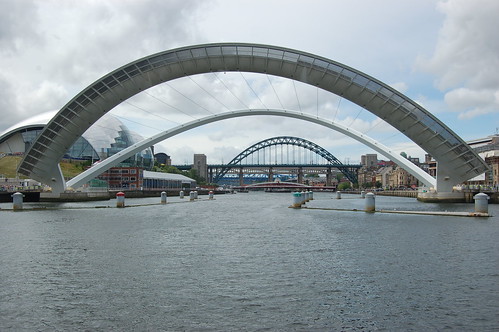
This is the Gateshead Millennium Bridge fully opened. A spectacular sight at any time but I understand the bridge is opened every day at midday during the summer. To the left is the Sage, Gateshead. This will be the location of the Lib Dem spring conference in March 2012.
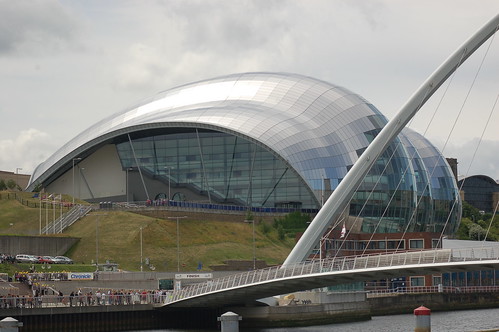
A better view of the Sage.

If you want to know anything about any site along the banks of the Tyne, Cllr Tommy Graham is your man. Here he is pointing out the landmarks to Councillors Ione and Noel Rippeth.

North Shields lighthouse, at the end of the North Shields pier

The only oil rig currently on the Tyne
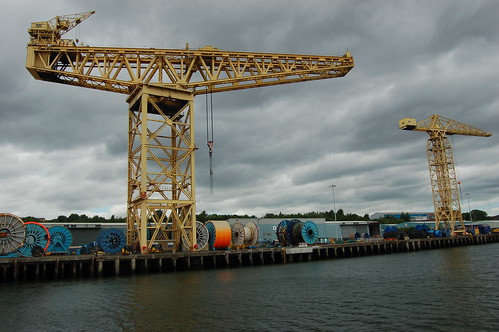
Both cranes were installed in 1924.

Lord Collingwood statue and Tynemouth Priory
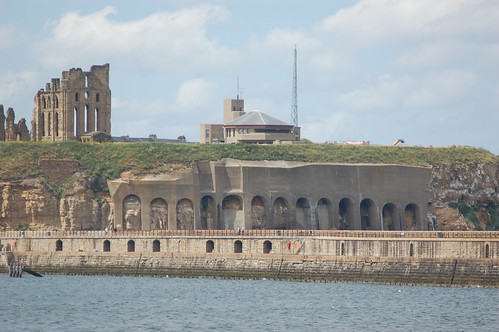
Tynemouth Priory and the cliff battlements
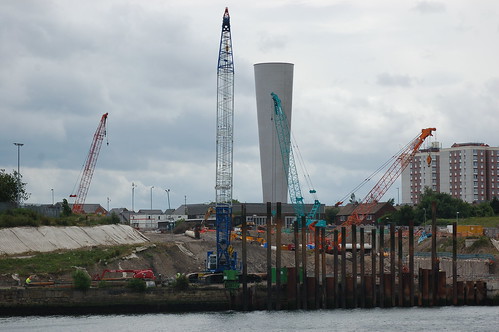
Work on going on the new Tyne Tunnel
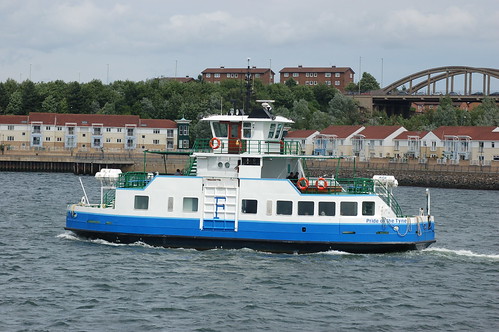
Tyne Ferry "Pride of the Tyne". It is likely to end its service when the new Tyne Tunnel opens.
This is the Gateshead Millennium Bridge fully opened. A spectacular sight at any time but I understand the bridge is opened every day at midday during the summer. To the left is the Sage, Gateshead. This will be the location of the Lib Dem spring conference in March 2012.
A better view of the Sage.
If you want to know anything about any site along the banks of the Tyne, Cllr Tommy Graham is your man. Here he is pointing out the landmarks to Councillors Ione and Noel Rippeth.
North Shields lighthouse, at the end of the North Shields pier
The only oil rig currently on the Tyne
Both cranes were installed in 1924.
Lord Collingwood statue and Tynemouth Priory
Tynemouth Priory and the cliff battlements
Work on going on the new Tyne Tunnel
Tyne Ferry "Pride of the Tyne". It is likely to end its service when the new Tyne Tunnel opens.
Opportunity Rocks
There is a possibility that a bid will be made shortly for Northern Rock, the Newcastle based former building society turned mortgage bank turned car crash turned nationalised bank. A group led by Lloyds of London Chairman Lord Levene appears to have plans to take over the company that was the first banking domino to fall that led to massive state intervention in the banking sector to save it, and the economy, from going down the pan.
Public ownership was always a temporary solution for Northern Rock. The need to return it in some form to the private sector was always clear. The two issues we face are timing and ownership. When is best for both the bank and the taxpayer to end public ownership? What form should the new ownership take?
Is now the right time to relinquish public ownership? For that we have to decide two points: do we as taxpayers get a good return on the investment and will the company prosper better under new owners?
It's a bit of a What If scenario. It may be that the company's future growth will be greater if the public were no longer the owners. In such a scenario, we probably won't get much more for it in the future than we can get now. And given the state of public finances, realising an asset like this could reduce our need to borrow. It could be however that the bank will grow under public ownership and therefore a sale in the future would be more beneficial to the taxpayer. I tend towards the view that the company's growth in the public sector is going to be more limited. There are rules that restrict the bank because of the state aid it has received, rules that are designed to prevent unfair competition and prevent a public sector takeover of the entire banking sector by stealth. Freeing Northern Rock from those restraints, assuming the company is able to stand on its own two feet, could be more beneficial that leaving it tethered to the public sector. So perhaps an earlier change of ownership is better.
So that brings me to what sort of ownership would be best? There are some who want Northern Rock to be fully mutualised again. I am a great supporter of mutual organisations and want them to have a strong role in the economy and in the provision of public services. But, how to convert a state owned company into a mutual? At the moment it belongs to all of us. Can we really justify transferring the ownership to the existing customers? Why should they strike lucky in that way?
My solution is something more akin to our own proposals for the Royal Mail in which the employees become "partners" in the company though the overall employee stake is a minority of the overall ownership. There could also be an opportunity for long term customers to be given a minority of shares. Whilst this suggests a "lucky strike" for some, it should be only for those who were customers of the company before the crash, during it and after it. In other words, those who stuck with the company in the bad times rather than close down their accounts and shift their money elsewhere when the going got tough. Like the shares for employees, they would be held in a trust so could not be individually traded.
Unlike our Royal Mail proposals, I see no point in a public sector minority stakeholding. Such a stake could, under the rules on state aid, prevent the bank from growing further. Therefore, the rest of the shares could be sold within the private sector.
Other solutions are of course possible. A private sector consortium, private equity fund or existing company such as Virgin could buy the whole bank. Or it could be floated so that small investors could buy shares. The latter would be my second option (but combine it with the employee ownership model and suddenly it becomes very attractive!)
The reprivatisation of the banks gives us an opportunity to broaden direct ownership and especially to create a new culture of employee shareownership and participation. This may or may not be tried with Northern Rock but there are other opportunities coming up with the other banks and of course with Royal Mail.
Thursday, July 08, 2010
Labour leadership contenders in verbal punch up
It appears that a verbal punch up has broken out amongst Labour leadership contenders. Andy Burnham, according to The Independent, is having a bit of a spat with unnamed members of an equally unnamed rival leadership team (ie Ed Balls) over some poisonous media briefings. Startled bunny lookalike Andy Burnham is objecting to briefings which claim he will quit the leadership campaign shortly to avoid a humiliating last place. (Such a resignation could be a timebomb for Balls rather than a gift wrapped present as it could mean Balls coming last - what a humiliation that would be for Balls, coming in behind Diane Abbott!)
Should Burnham, indeed anyone, be surprised by the tactics allegedly employed by Balls? They shouldn't be. Briefing the media to destroy Labour opponents was a well used tactic of the Gordon Brown management team. Balls was the standard bearer of the Brown Praetorian Guard. Perhaps old habits are taking their time to die out.
---
Sent via BlackBerry
Think where interest rates would be now without the Coalition
The Bank of England interest rate has been held again at the record low of 0.5% by the Monetary Policy Committee. This may continue for some time yet, despite the growing threat of inflation. The current inflation rate is significantly above the target set by the last government, a target which is continued by the Coalition. At some point, the ultra-low level of interest rates will not be able to be sustained. Interest rates will have to rise, especially once the £150 billion of "quantitative easing" (ie printing money) starts to work its way through into prices rather than simply bolstering bank balance sheets and reserves.
Businesses will clearly want to keep interest rates low for as long as possible (though savers may think the opposite). The formation of the Coalition almost certainly saved the country from an immediate interest rate rise and therefore put off the day that business fears.
Had there been no coalition, the likely outcome would have been a minority Conservative government, with or without Lib Dem support. The summer would have been spent as an extended election campaign with an October election a strong possibility. Business and the international markets would have feared that the action needed to tackle the deficit and economic problems was at best delayed by a government lacking the majority to do anything anyway. There would have been a run on the pound with interest rates going up to support it. The knock on of that would have been higher costs for business, more unemployment, an even bigger government deficit.
I have argued from the moment the election result was clear that Coalition was the right thing to do in the national interest. Today's interest rate decision is a vindication of the creation of the Coalition. Everything could have been so much worse without the Coalition being brought into being.
Photos of the Deputy PM at PCA reception
The Lib Dem Parliamentary Candidates Association annual reception took place on Monday in Westminster with Deputy Prime Minister Nick Clegg as guest speaker. I was asked to do the photos so here are a handful. I've put a larger number in a group on my Flickr site: http://www.flickr.com/photos/jonathanwallace/sets/72157624441476166/
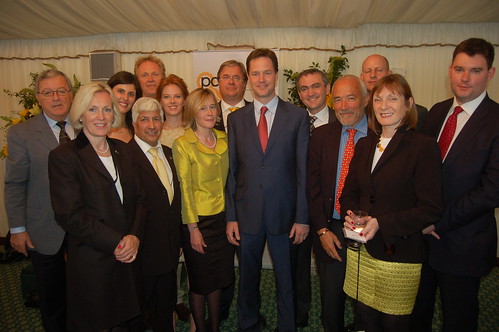
Nick with members of the PCA exec who were at the event. This one may (or may not) appear in Lib Dem News this week. (Extra points for those who spotted that this will mean I've had three page lead pics in a row!)
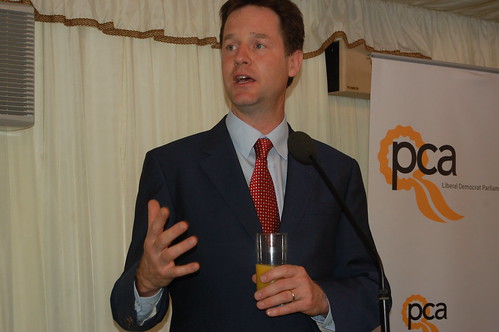
The future is bright, the future is (Lib Dem) orange. Nick speaks to the reception, complete with glass of orange.
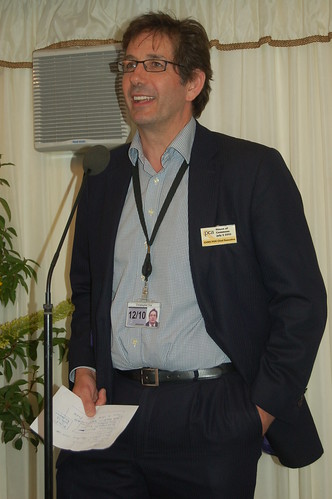
My former boss, Lib Dem chief exec Chris Fox, who has just become a member of the editorial board of Parliamentary Campaigner which I edit.
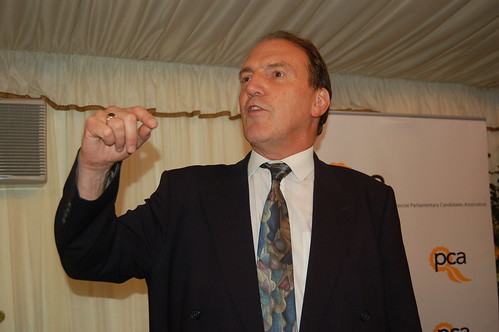
Deputy Leader Simon Hughes makes his point.

Meeting some of the guests.
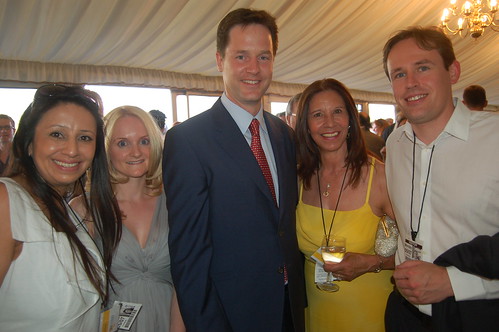
Durham member Mark Wilkes and family with Nick.
Nick with members of the PCA exec who were at the event. This one may (or may not) appear in Lib Dem News this week. (Extra points for those who spotted that this will mean I've had three page lead pics in a row!)
The future is bright, the future is (Lib Dem) orange. Nick speaks to the reception, complete with glass of orange.
My former boss, Lib Dem chief exec Chris Fox, who has just become a member of the editorial board of Parliamentary Campaigner which I edit.
Deputy Leader Simon Hughes makes his point.
Meeting some of the guests.
Durham member Mark Wilkes and family with Nick.
Wednesday, July 07, 2010
Port of Tyne inspection tour
I have just finished an inspection tour of the Port of Tyne, carried out by the Port of Tyne Health Authority. This body deals with health issues arising from the movement of goods and people through the various different port facilities. The tour taken place once every two years but this is the first time I have done it. We were taken by boat up the Tyne to view the different facilities until we got to Tynemouth when we headed back. Inevitably I went armed with camera (but not video). I will sort the photos soon and post up a selection on Flickr.
---
Sent via BlackBerry
Monday, July 05, 2010
PCA reception with Nick
I have just left the Lib Dem Parliamentary Candidates Association reception in Parliament and am heading back to the flat. Deputy Prime Minister Nick Clegg was the main speaker. Other speakers included Simon Hughes, Baroness Ross Scott, my former boss Chris Fox and Norman Lamb. I was there to do the photos which will be available for Lib Dem use shortly.
I head home to Gateshead quite early tomorrow morning. I could have done with getting a later train. I am rather tired after having been woken at 5am this morning by our cat and a fox having a noisy scrap in our back garden. It was ages before I got back to sleep. I also have a meeting at 3pm tomorrow so even if I wanted to lie in, the choice is not available.
---
Sent via BlackBerry
Sunday, July 04, 2010
Welfare is a joint individual and state responsibility
The debate about welfare went up a gear this week following the announcement by Ian Duncan Smith over the future of welfare benefits. Generally I think he is moving in the right direction. Frankly there is not that much to separate it from what Labour was planning when they were in office. That of course won't stop the sanctimonious posturing of Labour MPs who will accuse the Lib Dems of plague, pestilence and eating babies for breakfast. Labour will forgot the more absurd proposals they came up with, such as Caroline Flint's idea of evicting the unemployed from their council houses.
The welfare state is an important cornerstone of our society but it has developed in a way that was never intended. It was meant to be a partnership between the individual and the state to provide for people when they are in need. The problem is that there has grown up a presumption that it is the state's role alone to provide. Too often, individual responsibility to make provision for their own rainy days has been forgotten. Furthermore, the benefits system has created a disincentive to provide for oneself. Look at the penalty those on modest incomes have to endure who save all their lives for retirement and then lose pension credits and benefits because they have a modest private pension or savings. Saving is the right thing to do. Work is good and all help should be provided to help people to get into it. The benefits system too often does the opposite and traps people in poverty, discourages aspiration and leaves people believing that it is always someone else's responsibility to look after them. Welfare should be a joint responsibility of individual and state and should not operate by making people worse off or only marginally better off by being in work. The basic principle of the system should be to help people to help themselves with most help going to those who genuinely can't support themselves as their needs are genuinely far greater than that person's ability to address.
So the recent tax changes are moves I believe are going in the right direction. I believe work is good so we should tax it less. I believe saving is good so we should not take away from those who save for their retirement. Therefore increasing the state pension is the right thing to do. And we need less consumerism and need to move away from an economy based on the sale of consumer goods bought on credit. That was why the decision to raise VAT - ie taxing consumption rather than income - was the right decision.
So I was pleased to see my former boss Mark Littlewood articulating views similar to mine this morning on the BBC. Now I await the string of anonymous comments from local Labour members accusing me of eating babies for breakfast.
---
Sent via BlackBerry
Saturday, July 03, 2010
Labour MP who called for VAT rise under Labour attacks VAT rise under Coalition
On 29th October 2009, Blaydon Labour MP David Anderson called for a rise in VAT . However, on 28th June, Mr Anderson signed up to an Early Day Motion (2010/11 – 317) which claims “value added tax (VAT) is an unfair and regressive tax which disproportionately affects people on lower incomes”. The motion then goes on to oppose the recently announced VAT rise.
Mr Anderson has switched from being an advocate of a VAT rise under Labour to being a diehard opponent of a VAT rise when the rise is implemented by someone else.
This MP has made quite a fuss about the Lib Dems support for the Coalition budget which includes a rise in VAT. Perhaps he just needs reminding that his own record and his own sanctimonious posturing on VAT are not consistent with one other.
Friday, July 02, 2010
Labour's special pleading
There seems to have been a bit of special pleading recently by Labour over the reduction in the number of parliamentary constituencies. Jack Straw, in the first Deputy Prime Minister's Questions recently presented a case for special treatment for urban areas where, he claimed, too many people were not registered to vote. Whilst I appreciate there is a problem in voter registration being too low, this is not an issue just for urban areas. It affects rural areas as well. Basically Labour are pleading a special case for urban areas which by an unbelievable coincidence, happen to be mainly Labour areas.
Equality in the size of constituencies is a fundamental feature of a fair electoral system. It is one of the demands of the Chartists still to be realised. Small size, Labour rotten boroughs distort the representation of the people. Before 2004, I represented the largest ward in Gateshead whilst down the road was a safe Labour ward which for years had only half the electorate of mine. This was grossly unfair to the people I represented. Fortunately, a long delayed boundary review equalised the wards in Gateshead in 2004. Such discrepancies are an unfair feature of the current system which needs reform.
Interestingly, Labour's over representation based on small constituencies, does not always help to give them a majority in Parliament. Blair temporarily cracked that problem by picking up a large number of seats in Tory (mainly southern) shire areas but with that ability now largely lost, Labour could get holed up in urban areas with a shrinking electoral base. No wonder they are pleading a special case.
I heard the Labour case this morning made again. I was at a council advisory group looking into how the election was handled and at forthcoming electoral matters. Ian Mearns, now Labour MP for Gateshead, and someone for whom I have quite a bit of time, argued that urban ares could lose out under the boundary review due to people not being registered to vote. As I said previously, there is a problem but it affects many different areas.
Restoring balance to the constitution needs to be more than just equalising constituencies. Voting reform is crucial as well.
---
Sent via BlackBerry
The fault lines in Labour's approach to fair votes
Two different messages from two different Labour leadership contenders today on voting reform. Having previously said something vaguely positive about Andy Burnham a couple of weeks ago, now I need to rebalance my judgement of him. He was very dismissive of electoral reform in The Guardian this morning. It seems that, for him, reforming the decrepit way our country has been run is not a priority. I suspect he is in something of an arms race with other Labour leadership contenders to outbid them on being the nastiest to the Lib Dems.
David Miliband however has just gone up in my estimation. He unhesitatingly backed the call for AV on Radio 4 this morning. This does begin to throw some light on what Labour's actual view on reforming the voting system is. In the last Parliament, Labour announced a manifesto commitment to the AV referendum. This however had to be dragged out of them only after they realised there was a public demand for reform which they felt obliged to address. It is questionable as to how far they were prepared to go in actively pursuing the policy.
It is likely that there are two main groupings within Labour: the diehard reactionaries who want to keep first past the post even if it means long term Tory majority government (which has been the most regular outcome of FPTP) and those who understand and accept the merits of voting reform. Around these two groups is a nebulous bunch with no fixed view. It will be interesting to see however which MPs eventually back which positions once they are smoked out of the nebulous stance.
There are significant fault lines in Labour on reforming the UK. The coming referendum campaign could well see more surprising and not surprising coalitions forming as the diehards in Labour join forces with the Tory right to try to defeat reform.
---
Sent via BlackBerry
So far, my constituents back voting reform
Well, now we know. 5th May is the date for the fair votes referendum. That avoids two different polling days next year. Holding the referendum on the day of the local and devolved elections will help boost turnout. That however is not a guarantee of success. Campaign now and campaign hard if you want the Yes vote to win. This will be a hard slog and those opposed to change will throw all they can at keeping the existing system.
I have been conducting a survey of my constituents about their views towards the Coalition. I have included a question about people's attitude to voting reform. The early indications are that the majority support reform. I will publish figures when I have a bigger sample.
Meanwhile, if you were a Lib Dem parliamentary candidate, watch out for the next edition of Parliamentary Campaigner from the Lib Dem Parliamentary Candidates Assn. I completed it last night and it should be in your in box today. There are 2 pages on campaigning for the referendum.
---
Sent via BlackBerry
Thursday, July 01, 2010
Northern Democrat June 2010 edition
Northern Democrat No 52 June 10
This is the latest edition of the Northern Democrat, edited and produced by me for Lib Dems in the North East, Yorkshire and Cumbria.
This is the latest edition of the Northern Democrat, edited and produced by me for Lib Dems in the North East, Yorkshire and Cumbria.
Wednesday, June 30, 2010
Another rewriting of history by the Lady Harriet
The Lady Harriet has just screeched her way through PMQs with the now traditional Labour practice of being in denial about their record and rewriting of the history books. The reality is that the public sector is now far larger than we can afford. Labour before the general election accepted that jobs in the public sector would have to go even of they won the election. Nearly quarter of a million public sector workers were due to be made redundant over two years under Labour.
All that has been airbrushed out of the record books by Labour. Any cuts, even if they reflect their own plans prior to the election, are opposed. Labour claims we can get by without any cuts. The reality is they have abandoned credibility in pursuit of opposition.
---
Sent via BlackBerry
Whickham Library Mosaic unveilling

A pleasant event last week which I attended with my ward colleagues John McClurey and Marilynn Ord was the unveilling of the mosaics in the Whickham Library garden. The ceremonial bit was done by Joe Mitchison, the deputy mayor of Gateshead.
The mosaics were produced by students at Whickham School and by children at the Gibside Special School.
I turned up with cameras and ended up taking a long list of requests for photos including by officers of the council. I was happy to oblige. Hopefully some of the photos will turn up on Council publications at some point.
Ken Clarke accused of being a Lib Dem!
Ken Clarke, Secretary of State for Justice, is today announcing a review of sentencing policy. He is quite rightly concerned about the high level of re-offending by people who have served a short term prison sentence for a non-violent offence. The Lib Dems fought the election arguing that sentencing policy was counterproductive because those convicted of low level offences and sent to prison were coming out as better trained criminals who went on to re-offend. The effect was an increase in crime in the UK, rather than a cut. Clearly something had to change.
It now looks like Ken Clarke is introducing that change. It is absolutely right that offenders are punished. Rather than all of them going to prison colleges of crime, Lib Dems have rightly argued that some who are first offenders, and whose crime was non-violent, could be punished through community payback. In other words, punishment would be a requirement to work unpaid on projects that directly benefit the community, such as cleaning up graffiti.
The advantages with this system of community payback are that justice is seen to be done, the community gets a benefit, offenders are rehabilitated more effectively and offenders are not put into the company of large numbers of experienced offenders who can tutor them to be more effective criminals.
The fact that Ken Clarke, the Conservative Justice Secretary, is introducing this change should hopefully put to rest the claim that community justice for some is not being "soft on crime". That was a sterile argument in which the likes of Labour's Blunkett and Reid engaged. Their tough talk and posturing simply led to more trained criminals and more crime.
That said, it was interesting to experience the BBC today twice accuse Ken Clarke of being a Liberal Democrat because of the policies he looks set to introduce.
---
Sent via BlackBerry
Tuesday, June 29, 2010
An impromptu mini-public meeting
I had to go into Gateshead this morning for a meeting of Tyne and Wear Archives and Museums Committee. As I was waiting at the bus stop, residents started to quiz me about various local issues. It turned out to be something of a mini public meeting for enough people as could be crammed into a bus shelter.
Meanwhile, over to the archives and museums committee. I am one of Gateshead's three reps on the joint committee. I was on the two former joint committes that previously ran the two services (they were merged last year) until 2000 when my London job required my resignaiton. Now that I am largely (though not entirely) free of my London role, I was able to pick up in May where I left off a decade ago. Being an historian, the committee is something of which I am very pleased to be a member.
Meanwhile, over to the archives and museums committee. I am one of Gateshead's three reps on the joint committee. I was on the two former joint committes that previously ran the two services (they were merged last year) until 2000 when my London job required my resignaiton. Now that I am largely (though not entirely) free of my London role, I was able to pick up in May where I left off a decade ago. Being an historian, the committee is something of which I am very pleased to be a member.
Thursday, June 24, 2010
MP claims justice "not as good" at some courts
Did David Anderson, Labour MP for Blaydon, really mean to suggest that Gateshead Court dishes out justice that is "not as good" as that delivered by Blaydon court? I ask because that was his response to the proposed closure of Blaydon court and the transfer of its functions to Gateshead in The Journal on Thursday.
I can understand his desire to want to protect facilities though there are times when frankly, a building has outgrown its usefulness or a service has outgrown the building. Mr Anderson however would be better served by being more realistic when responding to Government announcements. Were I a magistrate or member of court staff based at Gateshead, I would find his allegation that justice handed out there was "not as good" somewhat insulting. I would also find it bizarre as the same magistrates and staff based in Gateshead run Blaydon court. Perhaps Mr Anderson may wish to substantiate his claim with some evidence, and also explain what he means by "not as good".
Mr Anderson then went on to claim "In cases where people have fallen into crime because they are desperate, having to travel six miles and pay for the bus fare may not seem a lot to you and me, but it could just make things worse."
Firstly, let me remind Mr Anderson that people are presumed innocent until proven guilty. The words he used imply that all those charged are in fact guilty. That is not always the case. Secondly, even when desperate, "falling into crime" is not justifiable. "Desperation" is not an excuse for burglary, theft, vandalism, drunkenness and so on. I find it staggering that one of our own law-makers can give comfort to criminality in this way.
Thirdly, Mr Anderson seems to think it is terrible that someone convicted of "desperate" criminal behaviour should have to pay a bus fare to travel to Gateshead. People already have to pay to travel to Blaydon which for many is more difficult and costly to get to than Gateshead.
If guilty, paying the bus fare to get to court is just a small part of the price you pay for breaking the law in the first place.
Alan Beith MP speaking to North East Conference
This is a bit of catch up by me, having been away for a week in London. This is Alan Beith's speech to the North East Liberal Democrats' regional conference on 12th June. Alan announced the Lib Dem Parliamentarians from the North East - himself, Ian Swales, Rupert Redesdale, Diana Maddock and soon to be ennobled John Shipley _ are to form a group to lobby the Coalition Government on behalf of the region.
Wednesday, June 23, 2010
From sensible social democrat to clueless quack doctor
Once upon a time I used to have a bit of time for David Miliband. He seemed to be something of a sensible social democrat. He could put forward a coherent case for what his then Labour government was doing. He appeared to be interested in reforming the UK. Well, change of government and change of posture by Miliband The Older.
Today I read in our regional newspaper, The Journal, that Miliband appears to be against any cuts, warning, "The 25% cuts to public spending will, of course, hit the North East worse than other region." The question has to be asked, if you don't have cuts, how do you balance the books? Is it really credible to be against any cut going? It's the easy position to take. Miliband is currently engaged in a battle to beat up his younger brother, kick Ed Balls into the long grass and generally ignore Diane Abbott as an amusing irrelevance and Andy Burnham as an unreconstructed Blairite. In other words, with Labour members having set themselves against the reality of the financial situation and sinking rapidly into pure oppositionism, contenders for Labour Leader need to reflect that outlook. At a time when Labour needs leadership, the Labour party is not interested. The leadership contenders are therefore posturing as quack doctors offering palliative medicines that do nothing, claiming that the economic crisis can be solved with no pain. They need to do that as they need to strike a chord with their out of touch members.
The unreal world in which Labour lives is illustrated by a comment I have received from a leading Labour councillor in the North East which will be posted up soon on my post yesterday about the Budget. It needs a reply which I will write soon and post up alongside it. In effect, Labour are offering pain free solutions. The response I have from my own constituents is that pain is expected because they know the dangers of doing nothing. They do not believe the pain free palliatives on offer from Labour.
It is perhaps a bit unfair to dismiss all the Labour leadership contenders as quack doctors. Andy Burnham himself did offer recently some ideas on reducing the deficit by questioning the protection given to the NHS budget. It may not do him any good in the Labour party but it does show that perhaps there are one or two people in the Labour party who understand the predicament the country is in. Their problem is that they are tiny in number in a party in denial about the situation we are in.
Monday, June 21, 2010
The Budget - the correct decisions
Sound money, getting the deficit under control and the structural deficit eliminated, a rise in capital gains tax, an increase in the personal allowance of £1000, capital spending protected, measures to help businesses start up and employ people in the regions, restoration of the pensions rise to earnings, clamping down on runaway housing benefit costs (the current system simply pushes up rents and puts more money into landlords' pockets), the bank levy, the rise in the children element of tax credits for low income families, the reduction in benefits to wealthy families that don't need them, help for councils to freeze council tax. These are all the right decisions.
There was a cheer from me when it was announced the upgrade of the Tyne and Wear Metro will go ahead. Let's hope all those Labour members who were shooting off statements attacking the Lib Dems for "cancelling" the plans will be applauding as well.
The costs? Clearly the rise in VAT is one of them. Remember however that most basics, such as most foods and children' clothes are exempt or like domestic electricity, charged at only 5%. These exempt items form a higher element of the basket of goods bought by people on lower incomes. And the wealthier pay considerably more VAT than those on low incomes.
Pay freeze in the public sector: yes, that is an unfortunate price but given the choice between more public sector job losses and better pay in the public sector, which would you go for? And don't forget, those on incomes of less than £21,000 will get a pay rise. But don't forget, many people in the private sector have taken pay cuts to protect their own jobs. Many have cut their hours. The private sector has already taken the pain. The public sector cannot be treated differently.
The budget needs to be considered in it entirety. It is aimed at putting the economy and the finances of the nation back into order and ensure the pain is shared across all sections of the community whilst avoiding putting too heavy a burden on people on low incomes. I believe that whilst the Budget is not perfect, the right decisions have been taken.
---
Sent via BlackBerry
Photos of Deputy PM at Lib Dem local government conference
I was at the Lib Dem local government conference in Westminster on Saturday. Nick Clegg, the Deputy Prime Minister, spoke on Saturday morning. Here are a few of the photos I took. There are more on my Flickr site: http://www.flickr.com/photos/jonathanwallace


Saturday, June 19, 2010
At the Lib Dem local government conference
I am currently at the Lib Dem local government conference in the LGA HQ in Westminster. The presence of my cameras shows I am here in my capacity as video-maker. The Deputy Prime Minister was our first speaker. Nick spoke extremely well and gave an excellent and superbly reasoned case for the Coalition and what it is seeking to achieve. I got the speech on video and it will be posted to YouTube shortly. Watch this space.
Local Government Minister Andrew Stunell spoke later and we have Simon Hughes on shortly.
---
Sent via BlackBerry
Get Carter car park to bite the dust - at last!
The long running saga of the demolition of the multi-storey car park in central Gateshead that was made famous by its appearance in the iconic film "Get Carter" looks as though it has a happy ending. The demolition had started last year (it was initially planned to take place in 2007) but was stopped by the Council. The cause was the need by the developers to bring forward an acceptable development plan for the area.
Council Leader Mick Henry announced at the meeting on Thursday that agreement has now been reached and demolition can go ahead again. Good news at last. The end of this eyesore car park will not come too soon.
---
Sent via BlackBerry
Thursday, June 17, 2010
Yet more collective Labour amnesia
I've just finished a full council meeting where we have the usual occurrences: Council Leader Mick Henry referred to my blog and an eminently sensible proposal from the Lib Dems was rejected by Labour. We also had some Labour posturing and pseudo-rage about the Coalition. This is likely to be an unofficial item on all future council meetings.
Today's "rage" was about cuts brought in by the Government. Labour claim they will put growth at risk. That leaves me wondering why they do not feel the same about the huge cuts Labour made in April to local government. In Gateshead they amounted to something in the region of £12 million. Surely a case of Labour collective amnesia?
---
Sent via BlackBerry
Wednesday, June 16, 2010
North East Regional Conference
North East Liberal Democrats' regional conference was held on Saturday 12th June at Gateshead Civic Centre. John Shipley, Leader of Newcastle City Council and about to become a member of the House of Lords, was the first speaker. Here is his speech:
A few photos of the conference:

Above and below, John Shipley addressing conference


Peter Freitag (former North East Regional President), John Shipley and Baroness Diana Maddock

Director of Campaigns Hilary Stephenson gave a presentation on the general election campaign.

The registraion desk - 100 people attended the conference
A few photos of the conference:
Above and below, John Shipley addressing conference
Peter Freitag (former North East Regional President), John Shipley and Baroness Diana Maddock
Director of Campaigns Hilary Stephenson gave a presentation on the general election campaign.
The registraion desk - 100 people attended the conference
Monday, June 14, 2010
Labour's growing amnesia
A letter in the Newcastle Evening Chronicle tonight reads, "The sight of Mrs Thatcher in the doorway of number 10 Downing Street with David Cameron surely sends shockwaves to the North East." A rant about the killing-all-first-born tendency of the Coalition government then followed.
The author of these comments is someone called Nick Kemp, a Labour councillor in Newcastle. I wonder what his thoughts were three years ago when Gordon Brown invited Margaret Thatcher to Downing Street and then paraded her in front of the media. Or has he conveniently forgotten his then leader's actions? Watch out for bucketloads of Labour amnesia in the coming weeks and months.
---
Sent via BlackBerry
The expensive price of cheap oil
The USA is in a state of frustration and anguish about the oil disaster in the Gulf of Mexico. The apparent inability of BP to cap the leaking well that is polluting the sea and the coast is definitely a cause for alarm. Helpfully for the Americans, the culprit has the word "British" in its name (though the Americans own 40% of it). It helps deflect attention away from the inability of anyone to tackle the crisis successfully.
America, indeed the whole of the world economy, however must reflect on the cause of this disaster. The blow-out of an oil rig is incidental. The real cause of this crisis is our dangerous over-reliance on fossil fuels, in this instance, crude oil. The USA is the world's biggest consumer of oil which it wastes in an unforgivable way. And it's not just America. The absurdly wasteful use of oil is a characteristic of the way the world economy operates.
We therefore have to move away from our dependence on cheap oil and fossil fuels in general. The real price we are paying for cheap oil will cost us dearly in the long run. Let's hope this lesson is the silver lining in the cloud of the Gulf of Mexico crisis.
---
Sent via BlackBerry
Sunday, June 13, 2010
Nissan grant goes ahead
Vince Cable, in his role as Business Secretary, has approved the grant to Nissan to develop electric, low emission cars that was initially announced by the last government. Prime Minister Cameron announced last week that the £20 million grant will go ahead. The announcement was important in the North East where the work on developing and hopefully building the vehicles will take place.
There is a bit of a lesson for Labour in this matter. Since the formation of the Coalition, the "socialist" brethren have come out against every cut, and have also implied that a review of previous spending proposals means that they will automatically be cut. The announcement of last week means Labour could be described as scaremongering. There will be cuts soon but not every spending decision by Labour will be axed. That won't stop Labour claiming the axe is falling anyway.
---
Sent via BlackBerry
North East Regional Conference
Yesterday was the North East Regional Conference in Gateshead. It was a bit too short notice after the election to have a Lib Dem government minister speak to us (isn't it great to be able to speak of Lib Dem ministers!?). We did have Hilary Stevenson, the party's director of campaigns, speak in the final session.
Alan Beith reported that the Parliamentarians from the North East - himself, Ian Swales, and peers Redesdale, Maddock and soon to be appointed Shipley - are to form a group to lobby for the interests of the region.
I had to miss the workshops that were held to head off to Swalwell Park for the official opening of the play area. I had to leave that before the mayor arrived (he was late) and since I had offered to do some photos for the council, I left my camera with an officer who took them instead. My camera was then passed down a chain of people and arrived back at my house in the evening.
I am now on the Metro heading to Tynemouth to meet some historian friends of mine. I'll be discussing the Washingwell Roman Fort with Professor Norman McCord for a video I am planning to shoot shortly. More about that on another day.
---
Sent via BlackBerry
Friday, June 11, 2010
Another door knocking session about the Coalition
I've just got home from a door-knocking session in my ward in which we were talking to constituents about the Coalition Government, as well as local issues. 100 survey forms were delivered last night. My ward colleague, Cllr Marilynn Ord, and I called back tonight to collect the replies. We got 25 back. Some more are likely to be posted to me.
We had a similar response on Saturday when we were last out on the doors. Again, the feeling about the Coalition is positive. We had a couple of people today who were opposed to the Coalition but they were Labour supporters anyway (and they hadn't filled in the survey form we had delivered).
From the two days of doing the survey we have 48 replies. When we have 100 replies, I'll produce a running total.
---
Sent via BlackBerry
Wednesday, June 09, 2010
The first surprise of the Labour leadership contest
Well, well, well, Diane Abbott makes it onto the Labour leadership ballot paper against the odds. It was an act of charity by MPs who don't support her and want her defeated. It does mean however that the leftwing has at least a standard bearer, even if it is one who is not credible as a party leader. It will be interesting to see how she performs. She may not necessarily come last in the first round of counting (note Labour thinks the alternative vote is so good they use it for their leadership election) and may soak up what is left of the old left. There may even be the odd left winger who is realistic enough to know she is a dead loss as leader but votes for her knowing she stands no chance of election. It will make them feel good about themselves before voting for one of the others as 2nd choice. Abbott's problem is that after the first preferences, seconds may be more difficult to come by.
David Miliband is spoken of as the front runner though the media put forward next to no evidence to support this contention. And if no candidate builds up a head of steam, it will be interesting to see how the second and third preferences play out. This contest I guess will not be won on the first preferences unless one of them gets some early momentum.
---
Sent via BlackBerry
Garden grabbing to end?
I woke this morning to the ranting of John Prescott and listened to his instant rewriting of history in which he put the blame for everything that had gone wrong under Labour on the "greedy Tory bankers in the City." So let us put aside the years of Labour's sucking up to rich greedy Labour bankers in the City, and concentrate on the issue at hand: garden grabbing.
This is the process by which domestic gardens are sold off to be developed for high density housing. It sometimes involves the demolition of the existing house though this is not always the case. Under the planning system, a domestic garden is regarded as a "brownfield" site - ie one that has already been developed so does not merit the sort of protection that can be applied to "greenfield" sites, those green open spaces near urban areas that have not previously been developed.
My own ward in Gateshead has seen a constant stream of applications to build on gardens or use small plots of land for housing development. Of those granted, some have been beneficial, others not so. Some I have supported, some I have opposed. The battles against these applications however are hindered by the classification of gardens as brownfield. What we need is some form of garden preservation system. Gardens are not being lost just to new housing. Many are disappearing under drives and concrete for patios. There are many areas that have changed their geography by unconscious stealth over the past 2 or 3 decades from being residential but with substantial garden areas to ones which are now substantially paved over. Front gardens in particular have changed in the 23 years I have been a councillor from being lawns to being car parks.
Over a period of time, the effect of this can be unintended but quite dramatic. All those hard surfaces mean that when it rains, there is a sudden surge of rainwater into a drainage system that can no longer cope, so we can get localised flooding. This can sometimes lead to sewers overflowing and damage to people's homes. With climate change often causing heavier bursts of rainfall, the water companies (and therefore each of us as customers) are having to invest more in upgrading the drainage and sewage systems. Secondly, natural watercourses are not replenished sufficiently. Many streams and rivers are drying up. This is damaging for the natural environment. Thirdly, with the ground denied its normal seepage of natural rainwater, it can lead in some areas to the ground drying out, which can lead to subsidence. If your house is build on such land, the bill for putting this right can be astronomical. Fourthly, garden spaces are now important wildlife havens and a significant loss of these green spaces will have a damaging effect on biodiversity.
It would be madness to stop the construction of high density housing in urban areas but the ever increasing demand for the development of green spaces in urban areas, particularly gardens, is something that has to be far better managed than has been the case until now. Hopefully the proposed change to the planning system, which will end the designation fo gardens as brownfield, will give a better degree of protection to the green spaces in our urban and suburban areas.
Tuesday, June 08, 2010
On-line petitions in Gateshead
Legislation passed last year requires Councils, as of 15th June, to have a system for allowing petitions to require debates at council meetings and to call officers to scrutiny committees. Later this year, councils will have to have an on line facility for petitions which will allow anyone to set up a petition on the council website on any issue as long as it is relevant to the work of the council.
Arguably I have made the strongest noises in favour of these plans in Gateshead. We had an advisory group meeting about them a couple of weeks ago and yesterday we had the Corporate Vitality Scruting Committee look at the issue as well. Both times I spoke strongly in support of the plans, as I did today (Tuesday) when they came before the council's cabinet.
It was an odd situation today in which I, as a member of the opposition, was speaking more strongly for a report proposed by Labour run Gateshead Council than the Labour members of the Cabinet (which is all Labour). Some Cabinet members expressed some doubts about the consequences, mainly in relation to "vexatious" petitions. I did point out that vexatious petitions can be produced anyway without having to be online. I illustrated this with a petition sent to me a few years ago. It was signed by 10 people and called for me to resign from the council to have a by-election (bizarrely we were only 2 weeks away from polling day!!!!!) The lead petitioner was the Labour candidate, another signatory was his wife and the other 8were well known Labour members who had signed the Labour nomination papers. Two weeks later I was re-elected with one of the biggest majorities in Gateshead!
Vexatious on-line petitions should not be a reason for not going ahead with the scheme, and anyway, as one Labour member who had doubts about the value of the exercise pointed out, we are legally required as a council to allow them.
One concern I raised was the time limit on debates in council sparked by a petition (such a petition would need 2000 signatures). 15 minutes is to be allocated to any such debate. This is the first time in our council constitution we are to have a time limit on a debate. We have limits on the length of speeches. That's fair enough, but in a 15 minute debate there won't be much time for members to speak if the Leader of the Council and Leader of the Opposition have both spoken.
The Leader, Cllr Mick Henry, agreed that the system can be reviewed after it's up and running. A suck it and see situation. Hopefully, this will be an experiment that will work well though we as the politicians will need to ensure residents know about it and are encouraged to use it.
Saturday, June 05, 2010
Survey of constituents about the Coalition
In my ward in Gateshead we are carrying out a survey of constituents about what they think of the Coalition. Today we launched the survey. I delivered 100 houses last night and this morning, my ward colleague John McClurey and I, called on the same houses to collect replies. We collected 19 and I expect some to come back by post. We will roll it out over the ward in coming weeks.
I haven't added the figures up at the moment. The numbers are too small at the moment to have any serious value. When we have over 100 replies, I will start to publish overall results on a rolling basis. That said however, the early replies are very encouraging with overwhelming support for the Coalition. We are also asking people about changing the voting system and again, the support for change is looking good.
One point raised is that some people want to see how things go over the coming months before making a final judgement on whether or not a coalition is a good idea. This is an understandable position to adopt and the survey gives people the option of reserving judgement.
The door knocking took longer than expected as we found more people wanted to talk and we broke our own rules by accepting an invite to go into someone's house and continue the conversation over coffee!
We also called in to the Sunniside Chapel fayre this morning. Again, the comments people made to us about the coalition were that it was the right decision in the circumstances and people were pleased that we got many of our policies in the Coalition Agreement. I also bumped into one of my former primary school teachers, Mrs Atkinson, who taught me 40 years ago. Nice that she remembered me after 4 decades!
---
Sent via BlackBerry
Wednesday, June 02, 2010
Northumberland County Show
As Monday was a bank holiday, I did no politics that day but went instead to the Northumberland County Show in Corbridge where I could exercise my odd interest in rotovators and hen houses for my allotment and generally have an enjoyable day out. If you feel the urge to catch up with what I did there, you can read about it on my recently established travel blog: http://traveltalesandnotes.blogspot.com/2010/06/things-to-do-in-north-east-england.html.
PMQs - the tone is different
Prime Minister's Questions - they used to be the weekly bear pit. Brown used them to bellow out lists like Stalinist beetroot and tractor statistics but otherwise avoided answering questions. Labour sycophants trotted out their planted questions. Nick Clegg was shouted down and treated dismissively by Brown.
The tone now is different. It is much less of a confrontational political punch up. Apart from Ian Davidson, a Glasgow Labour MP, who was stopped by the Speaker after making anti-Lib Dem comments best kept for the playground rather than Parliament, the questions on the whole were reasonable and appropriate. Notice also the difference in Cameron's response to questions compared to Brown's. The latter used to step forward with a huge file of stalinist statistics which would be rattled off like bullets from a sten gun. Cameron often stood at the dispatch box without notes.
Harriet Harman avoided screeching through her questions. And even the "socialist" Labour MP for Blyth, Ronnie Campbell, normally cherished for his entertainment value than his intellectual clout, put forward a reasonable question despite his barbed comment about Cameron's friends in the City (which overlooks Labour's friends in the same place).
So hopefully, PMQs in the future can develop as a useful tool for scrutinising the government rather than being a slanging match.
---
Sent via BlackBerry
Walking the dog beffore PMQs
I seem to have acquired the task of walking my mother's dog each day. I came by the task as an excuse to go out to explore historic sites near our village of Sunniside. Mother lives on the other side of the village so I am on my way there now. The aim is to walk the dog and get back in time for PMQs. So no detailed exploration of old ruins today!
---
Sent via BlackBerry
Tuesday, June 01, 2010
Labour's choice
In the Labour leadership battle, should the "socialist brothers and sisters" go for a candidate tainted by the failure of the last government, or someone from the not-very-electable left? That is the choice they are facing with the six candidates on offer.
The chances are that their choice will be reduced to only one of tainted characters. Diane Abbott and John McDonnell are up against a system that is designed in the first place to neuter the left. It is unlikely either will have anywhere near enough nominations to get on the ballot paper. Perhaps the first reform Labour's new leader needs to introduce is one that involves their own members in the nomination process. If Labour members do not realise that allowing Brown an unopposed return three years ago as Leader, without the debate needed to engage both the party and country generally, they have not learnt one of their biggest lessons of the past few years. So it seems, Labour needs to create a grassroots movement in which ordinary members are not treated as people who have to be held at arms length. Whether or not they can get that from one of the tainted candidates is difficult to say.
Reading the Guardian's Comment page today in which each of the Labour candidates is given space to set out their stall, the two left wing candidates make the clearest calls for change. Diane Abbott claims Labour needs to rediscover their moral compass and goes on to explain that "Labour should take back the civil liberties agenda." I suspect they are too late for that as this is a key issue for the Coalition. It would also mean a major uturn for Labour. It is unlikely any of the tainted candidates would be willing to do that. Were Abbott's plans to be adopted by Labour, it would mean Labour being on the same side of the government on a crucial area of policy. What then to differentiate Labour?
Though Abbott and McDonnell are the candidates who represent change, they also represent a throwback to the unelectable days of Old Labour. McDonnell calls for cuts to be rejected but does little to explain how the deficit can be cut. Meanwhile, Diane Abbott's main selling point is her opposition to the Iraq war. It's bizarre that a prospective leader of the Labour party defines herself as opposed to such a defining issue for Labour. It seems everyone in Labour is now opposed to the Iraq war. Pity they kept quiet 7 years ago (though in Abbott's case, she made her opposition clear at the time.) Nevertheless, being opposed to something that happened nearly a decade ago cannot form the basis of your political faith.
Assuming the Coalition succeeds, Labour will have to define itself in new terms. Quite how they will do that will be interesting to see but a simple fall into oppositionism will not be enough to give them an election victory or a defining mission statement.
---
Sent via BlackBerry
Subscribe to:
Posts (Atom)